Decking in West Bridgford
Composite and timber decking built across West Bridgford, Lady Bay and Edwalton — including the substructure underneath, which is the part that decides how long a deck lasts. Old deck removed and taken away as part of the job.
*Terms and conditions apply to our 12 month guarantee.
A West Bridgford Deck, Frame First
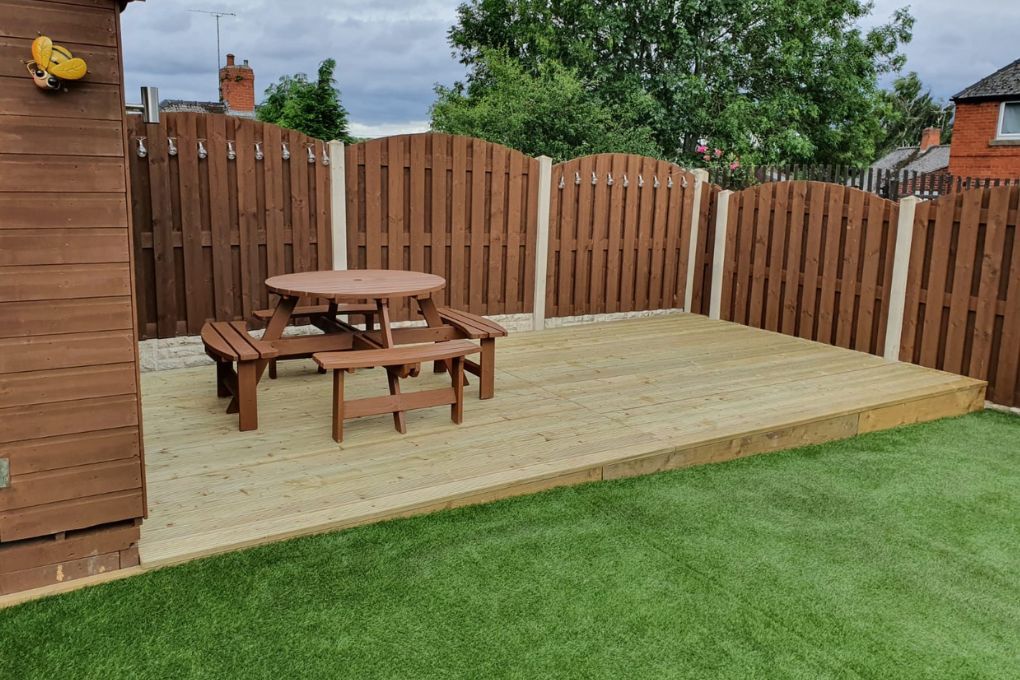
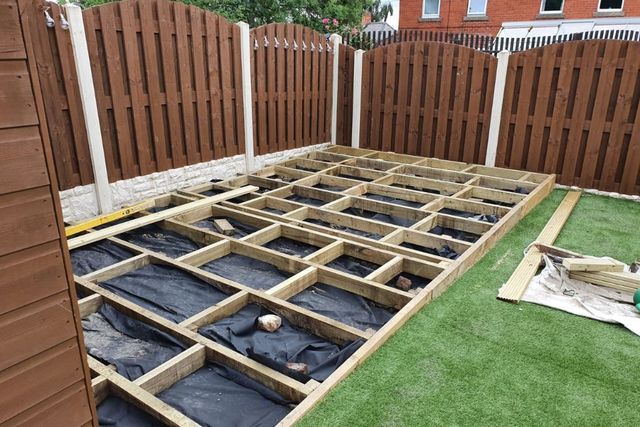
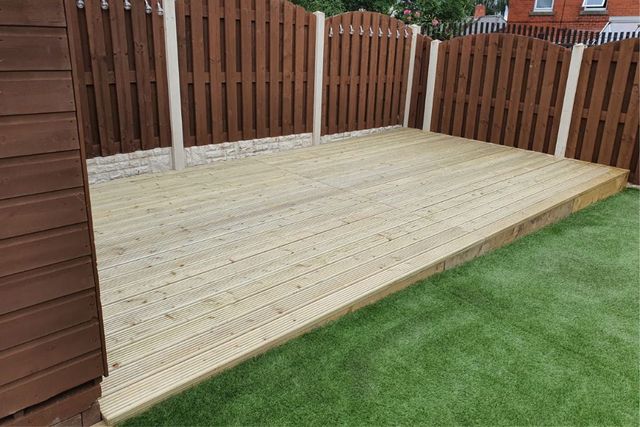
Three stages of the same West Bridgford job. We have shown the frame deliberately — it is what you are actually paying for, and it is the thing you cannot inspect once the boards are down.
Substructure, boards and the finished deck
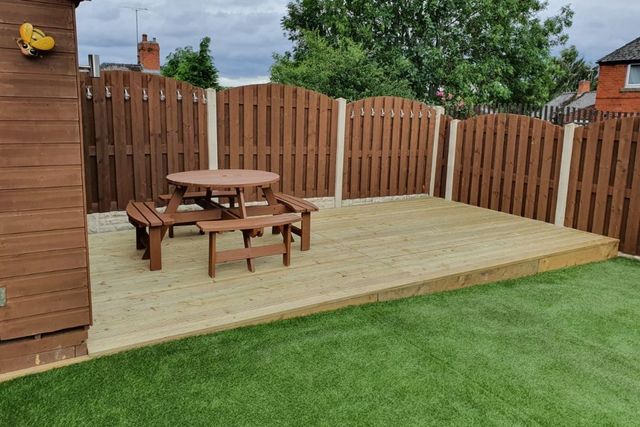
Decking in West Bridgford
West Bridgford gardens are well suited to decking. Plenty of them fall away from the house, and a deck is often the cheapest way to get a level, usable area off the back door without excavating and retaining half the garden. Others are flat but overlooked, where a deck defines a seating area rather than solving a level problem.
We build both composite and timber, and we build the substructure ourselves rather than laying boards over whatever is already there. That is the difference that matters — a deck fails from underneath, and the frame is the part you cannot inspect once it is finished.
Old decking is removed and taken away as part of the job. We are a registered waste carrier, licence CBDU474286.
What We Build
Composite or Timber? The Honest Comparison
Composite costs meaningfully more up front. It does not need oiling or staining, does not splinter, holds colour well past ten years, and most ranges have a textured or grooved surface with better grip when wet. It gets warm in direct sun and it is heavier, which the frame has to account for.
Softwood timber is the cheapest way to get a deck. It needs cleaning and re-treating on a cycle, it silvers if you let it, and smooth boards get genuinely slippery in a wet winter. It is the right answer where budget matters more than maintenance, and it can be replaced board by board.
Hardwood sits between the two — considerably more durable than softwood, beautiful, needs oiling to keep its colour, and costs accordingly.
Our honest steer: if you will actually re-treat it, timber is fine and cheaper. If you know you will not, buy composite. The most common regret we see is a softwood deck that was never treated, green with algae by year three.
The Frame Is the Job
Almost every failed deck we take up failed underneath, not on top. What we build into the substructure:
- Joist spacing set for the boards. Composite ranges vary in the support they need, and some need closer centres than timber — particularly on a diagonal lay. Spacing the frame to a habit rather than to the manufacturer's specification is how boards end up flexing underfoot.
- Ventilation underneath. A deck needs air moving under it. Boxed in tight to the ground with no airflow, the frame stays damp and rots regardless of what it is made of.
- Clear of the damp-proof course. Where a deck meets the house, the surface must sit below the DPC. A deck built over it bridges the damp course and pushes moisture into the wall — an expensive problem that shows up years later.
- Proper bearing. Posts on pads or footings, not on soil, and not on a couple of slabs laid loose.
- Fall and drainage. Water needs somewhere to go, and where it goes should not be toward the house or into a neighbour's garden.
Height, Balustrade and Permission
This is the part people are most often unaware of, and it is free to check.
A raised platform or deck can require planning permission in its own right once it is above a certain height above ground — and on a garden that falls, a deck that is level with the back door can be well above ground at the far end. Overlooking a neighbour's garden is a planning consideration too, which is precisely what a raised deck can create.
Once a deck is raised, edge protection stops being a design choice. A balustrade built in as part of the frame is far cheaper and looks considerably better than one added afterwards, so decide at quote stage rather than later.
Parts of West Bridgford also sit within conservation areas. We are not planning consultants and will not guess at your property's status — Rushcliffe Borough Council's planning team will confirm it at no cost, and it is worth the phone call before ordering materials.
Getting Rid of an Old Deck
An old deck is a surprising volume of waste — boards, joists, posts and often concrete. It cannot go in the garden waste bin: treated timber is not garden waste, and composite certainly is not.
West Bridgford is in Rushcliffe Borough, where the garden waste subscription runs around £47 for the first bin and £37 for a second, fortnightly with no collections over Christmas and New Year. The tip is Rugby Road, NG2 7HA, a Nottinghamshire County Council site requiring vehicle registration in advance and a permit for a van or trailer 24 hours ahead. No trade waste is accepted.
Where waste has come from work carried out by a tradesperson, disposing of it is that tradesperson's legal responsibility, not yours. We take the old deck away as part of the job — registered waste carrier, licence CBDU474286.
Why Choose Nottingham Fencing
We are a local, family-run firm run by founders Adam and Stephen, based on Beechdale Road with over 15 years' experience. We build the frame as well as laying the boards, and we will show you the substructure before it is covered — it is the part you are paying for and the part you will never see again.
- The old fence goes with us. Registered waste carrier, licence CBDU474286 — removal and disposal handled properly, nothing left on your drive.
- Measured before it is priced. The free survey is where we check post centres, ground levels and whether existing bases can be reused — which is what stops a price changing halfway through.
- Made to measure, not cut down. Gates are built to your opening rather than trimmed from a stock size, so they still swing properly a year later.
- Supply only if you want it. Happy to just sell you panels, posts, gravel boards and trellis if you are fitting it yourself.
- Insured and guaranteed. Public liability insurance in place and a 12 month guarantee on our work.*
- Reviewed by the people we have worked for. 4.9 out of 5 from over 160 Google reviews.
*Terms and conditions apply to our 12 month guarantee.
Areas We Cover Near West Bridgford
We build decking across Rushcliffe and the wider city:
Get a price for your West Bridgford fence
Send a few photos of the area and the height difference from the back door, and we will come back with a realistic range before arranging a visit.
Decking in West Bridgford — Common Questions
Composite or timber — which should I choose?
If you will genuinely re-treat it, softwood timber is fine and considerably cheaper. If you know you will not, buy composite. The most common regret we see is a softwood deck that was never treated and went green by year three. Composite costs more up front, needs no treating and holds colour past ten years.
Is composite decking slippery?
Less so than smooth softwood, which gets genuinely slippery in a wet winter. Most composite ranges have a textured or grooved surface with better grip when wet. No decking is non-slip in ice, and any deck in permanent shade will grow algae and need cleaning.
Do I need planning permission for a deck?
Possibly. A raised platform above a certain height can need permission in its own right, and on a garden that falls, a deck level with your back door can be well above ground at the far end. Overlooking a neighbour is also a planning consideration. Rushcliffe Borough Council will confirm for your address free of charge.
Does a raised deck need a balustrade?
Once it is raised, yes — edge protection stops being a styling choice. Build it into the frame from the start rather than adding it afterwards: it is cheaper, stronger and looks considerably better.
Why does the frame underneath matter so much?
Because that is what fails. Almost every deck we take up failed underneath rather than on the surface. Joist spacing set for the specific boards, airflow beneath, posts on proper bearing and a surface kept below the damp-proof course where it meets the house all decide whether a deck is solid in ten years.
Can a deck be built right up to the house?
Yes, but the deck surface must sit below the damp-proof course. A deck built over the DPC bridges the damp course and pushes moisture into the wall, which is an expensive problem that appears years later. It is a common shortcut and worth asking any contractor about.
Do you take the old decking away?
Yes, as part of the job. An old deck is more waste than people expect — boards, joists, posts and often concrete. It cannot go in the garden waste bin, and waste from a contractor's work is legally their responsibility. Registered waste carrier, licence CBDU474286.
Can you match the decking to new fencing?
Yes, and it is worth doing together. The same team fits both, so board colour, fence height and deck level are set out against each other rather than by two trades in sequence.