Metal Railings Nottingham
We supply, manufacture and fit a wide selection of metal railings, including bespoke designs. Bow top, vertical bar, ball top, wall top and handrails for steps — made to your measurements in steel, wrought iron or aluminium, powder coated and installed.
*Terms and conditions apply to our 12 month guarantee.
Railings Nottingham
Railings typically refers to metal railings, mostly steel and sometimes wrought iron. Whilst most security fencing is made from metal and follows a rail system, this section gives a brief overview of the options for metal railings where security is not your main consideration.
Railings in a residential setting are mostly found in front gardens, or marking an enclosure in a back garden. They are also commonly used on balconies, and are made of either wrought iron or steel.
There is a large variety of designs, with many companies offering bespoke options, but as with most forms of fencing they fall into broad categories. For metal railings the main categories are:
- Flat top
- Spear
- Ball top
- Bow top
Depending on the sections required they can also be formed into shapes such as arches, and can be used to give more character to a brick wall.
Vertical Bar Railings Nottingham
Vertical bar railings is a catch-all phrase for most metal fencing, with the exception of solid metal fencing. All metal railed fences need a number of vertical bars to form a fence or barrier, but the general understanding of vertical bar railings is domestic, non-secure boundary marking. Palisade fencing is made up of many vertical bars, but it is generally referred to by its own name and is very specific to industrial and security requirements.
Most fencing companies understand vertical bar railings to mean a fence made up of many vertical rails secured by a few horizontal bars, often just two. The main difference between one system and another comes down to how it is finished at the top. Bow fencing also consists mainly of vertical bars, but is usually referred to by name, or less commonly as loop railings.
Most vertical railings will be spear, flat or ball topped, or simply a continuing straight vertical bar with no decorative topping. The decorative options are mostly used for domestic front gardens, whilst flat top railings are more frequently used to define a boundary between public and private land. Flat top is also widely used as a protective barrier between a public walkway and a hazard such as a busy road or a raised platform, where it becomes a form of balcony. It can also be found alongside sloping walkways, where it doubles as a handrail.
Metal railings near me
Looking to source metal railings near you? Get in touch and we will be happy to make and install your railings.
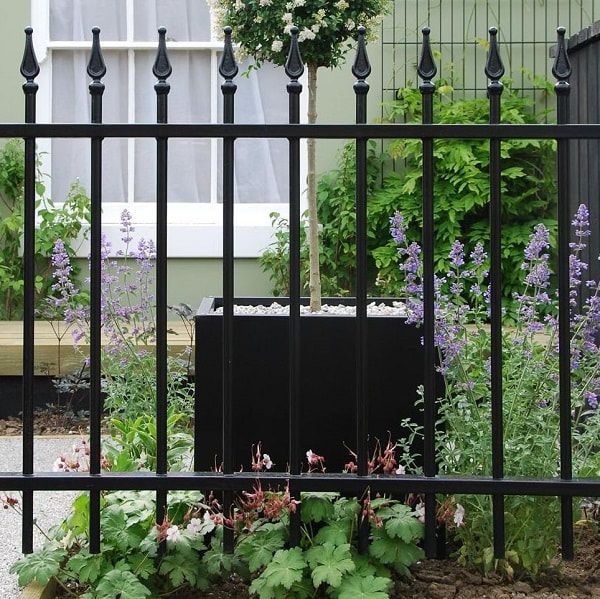
Spear Top Railings
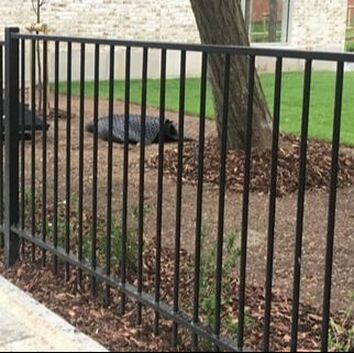
Flat Top Railings
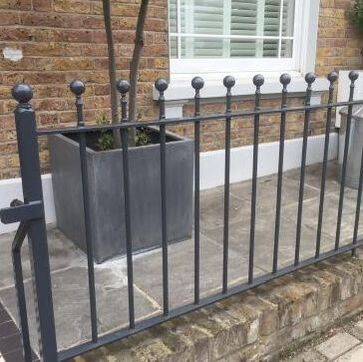
Ball Top Railings
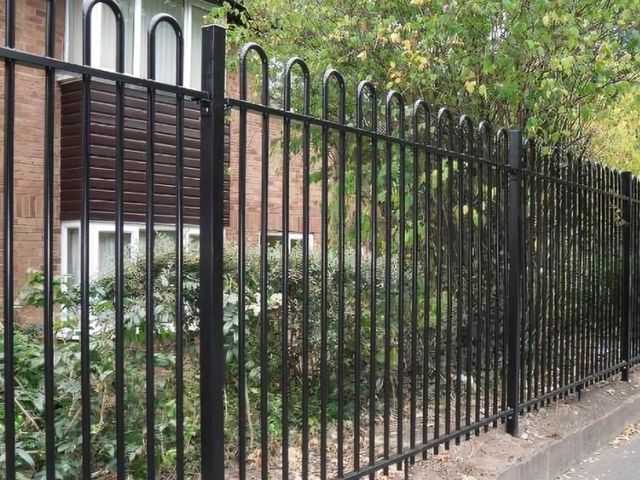
Bow Top Railings
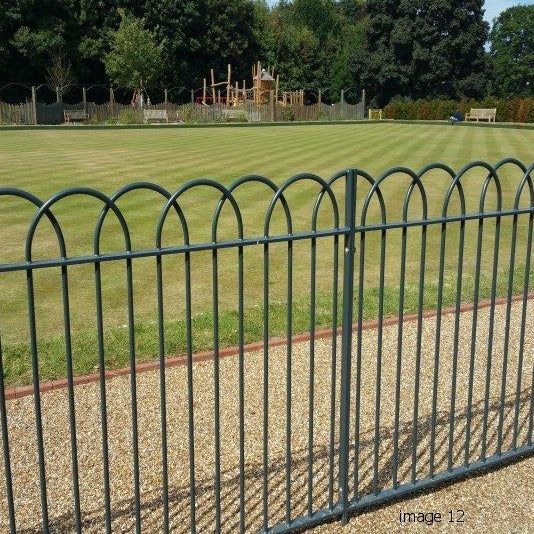
Double Overlap Bow Top
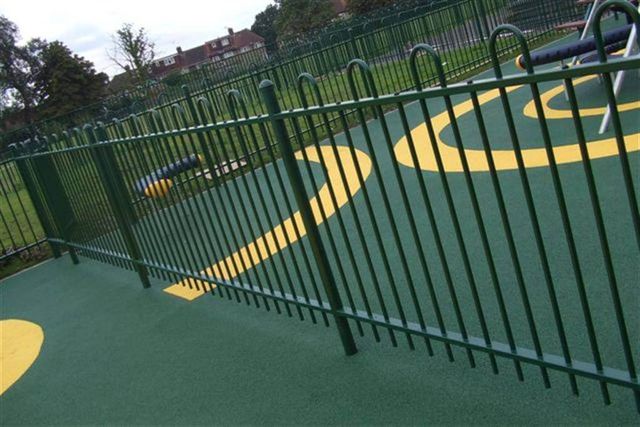
Alternate Gap Bow Top
Bow Top Railings Nottingham
Bow top railings are generally found in more public areas, often enclosing somewhere children are likely to play, as they are one of the least imposing or dangerous fence types. There is probably an expectation that they will be climbed over, and if so there should be minimal chance of injury — this fencing is generally used to define an area rather than restrict access to it.
There are a few variations in the spacing of the bows and the railings between them. Standard bow railing sections typically come in 1m, 1.2m and 1.5m heights with accompanying gates. The larger sections, quite often used for schools, are 2m, 2.1m and 2.4m above ground, with the width between posts ranging from 2m to about 2.8m across. The main colours are green, black, red, grey, blue and brown, but we can accommodate almost any colour you want.
Ball Top Railings
For smaller metal fencing projects — which covers most residential front and rear garden railings — we manufacture these ourselves. That allows us to provide a very personal, bespoke service whilst still being competitive.
The images below show the progress of one customer's ball top railings from manufacture to final installation. Every ball is welded on individually and cleaned back to look like a smooth part before being powder coat finished — handmade British ball top railings, made locally in Nottingham. If you want to include a metal gate we can make that too, and our custom service lets you decide the exact spacing and size for a metal driveway gate so it integrates perfectly with your railings.
Please get in touch to arrange a survey and share your ideas.
Railing manufacturers near me
We are railings manufacturers as well as installers. We will happily manufacture and install a railing fence just for you.
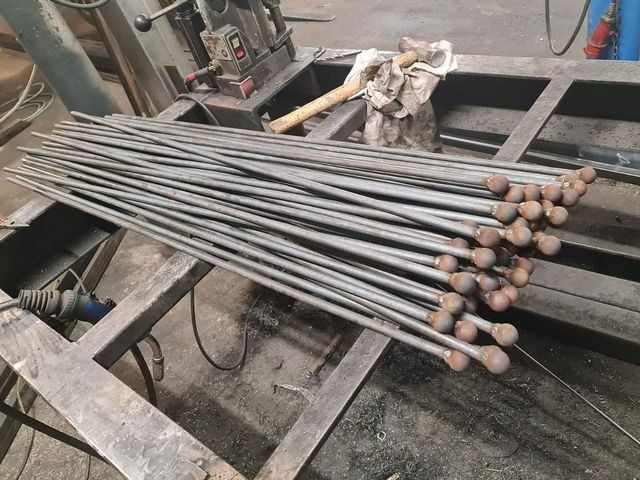
Bars with ball tops individually attached
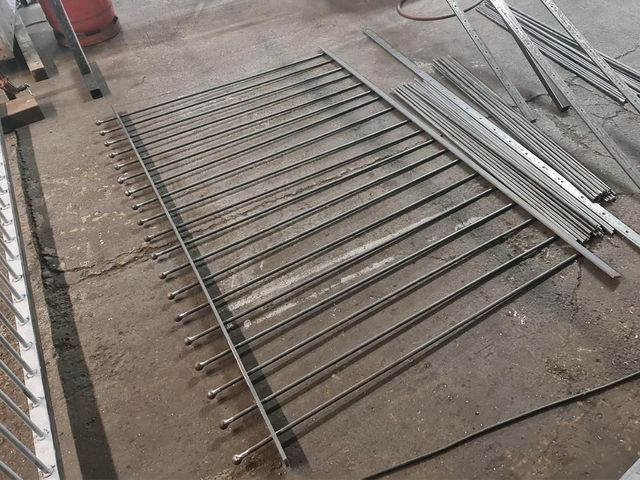
Ball top rails being attached together
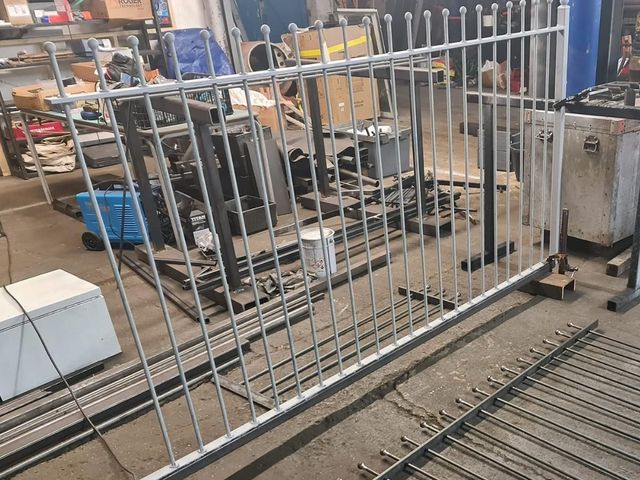
Ball top railing section ready for painting
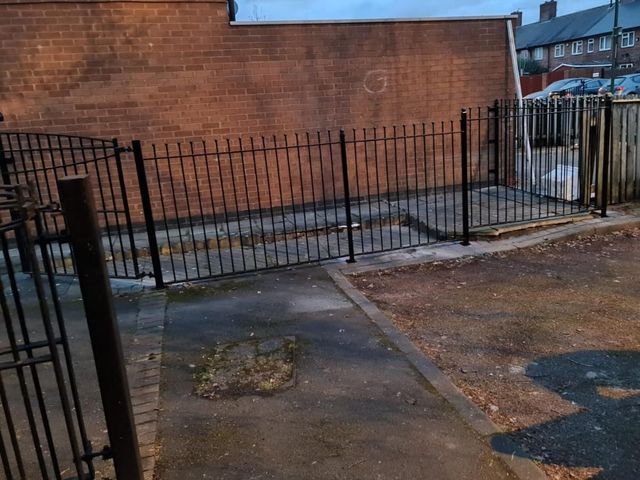
Ball top railing run
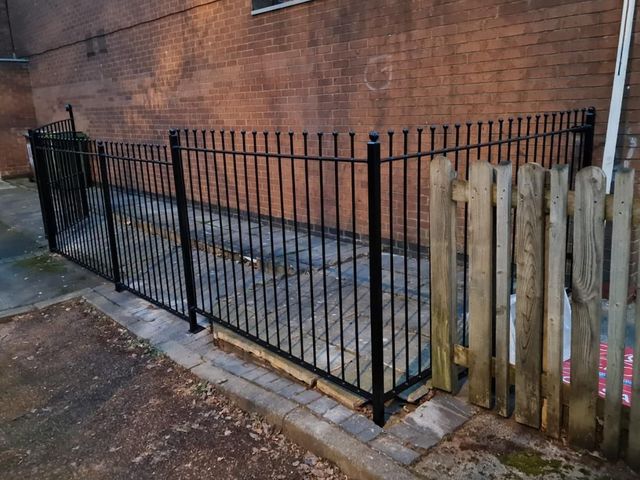
Ball top railings installed with corner post
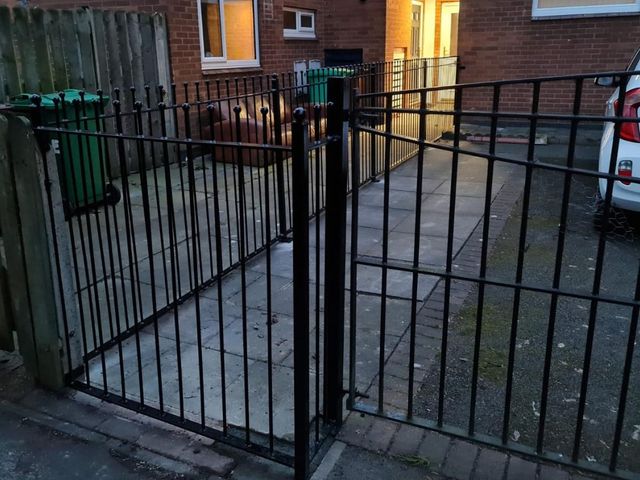
Ball top railings attached to gate
Wrought Iron Railings Nottingham
Whether it is wrought iron or steel, we can manufacture a variety of railing options. Wrought iron and metal railings are often used in newer housing developments, providing discreet fencing around a communal grass area to deter footfall across it, or used in a fashion similar to the repair work shown below — fencing off smaller grass and planting areas at the front of a property to give the plants some protection from passers by.
As the examples show, the designs and thicknesses of wrought iron railings differ quite dramatically. We can cater for most scenarios and offer suggestions depending on the effect you want to create and the budget you are working to.
A Damaged Wrought Iron Railing Repaired
Because we fabricate ourselves, a damaged section can often be repaired or matched rather than the whole run being replaced.
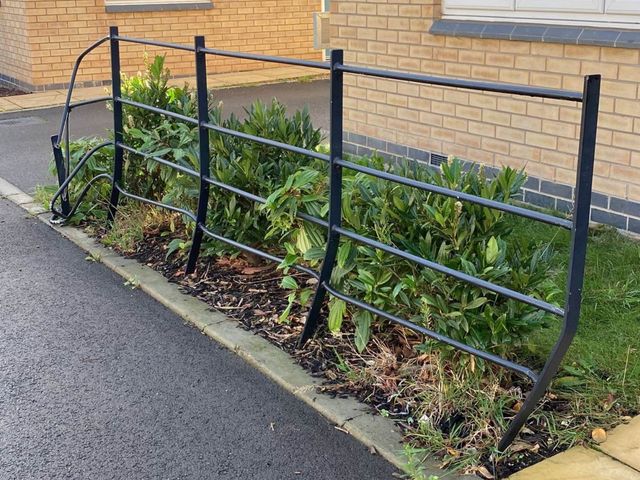 Before
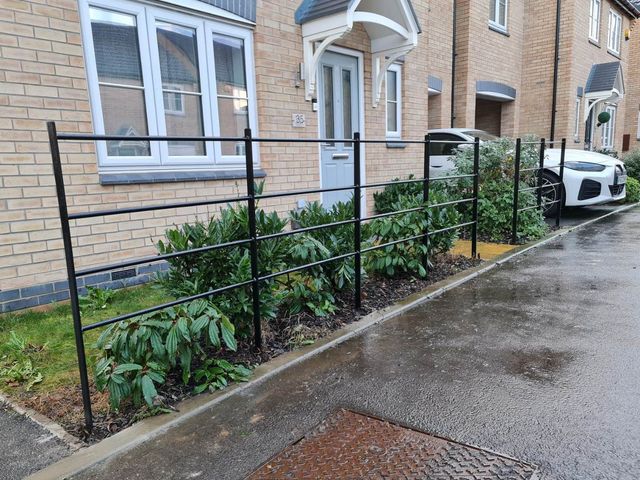 After
After
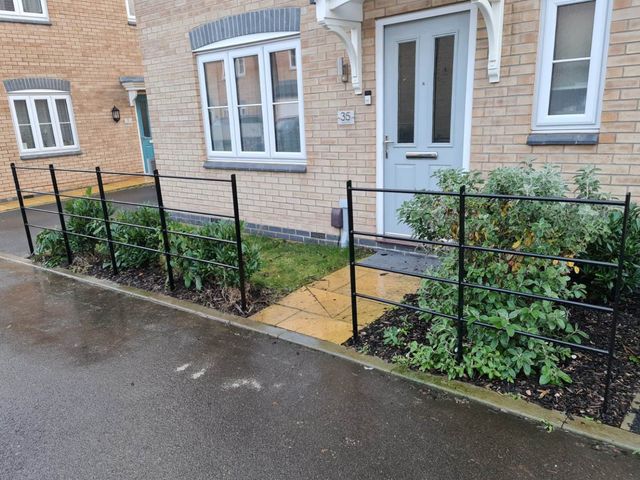
Front garden railings
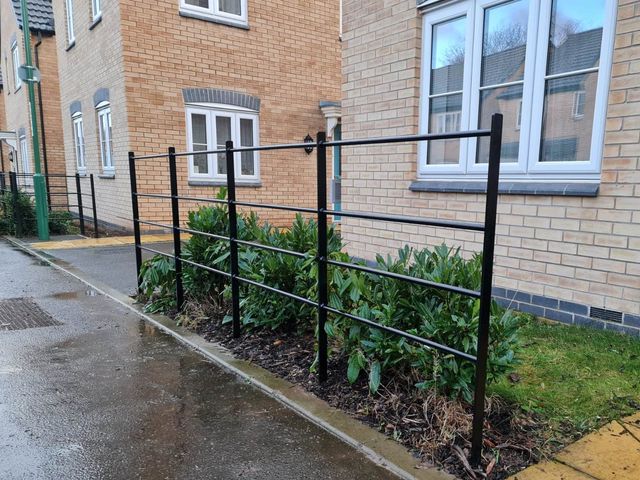
Wrought iron fencing
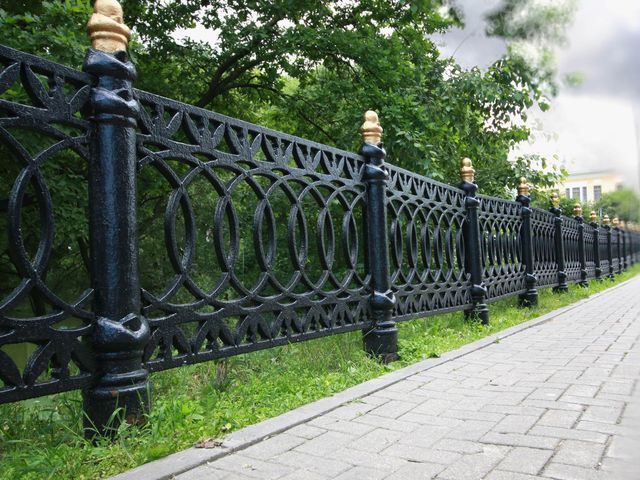
Circle and loop design
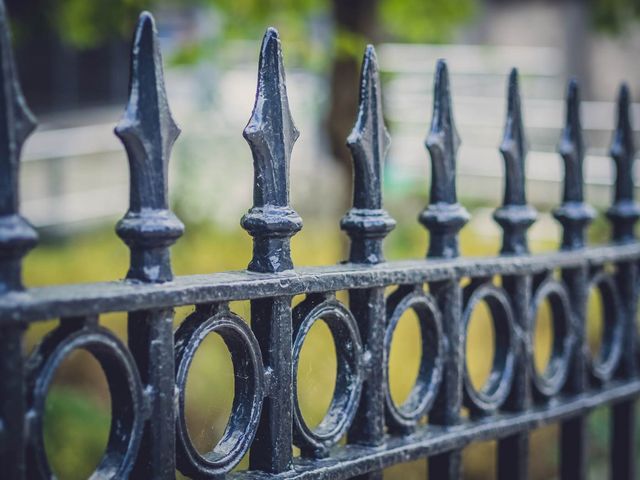
Spear top wrought iron
Wall Top Railings Nottingham
Wall top railings are growing in popularity because they provide a couple of functions at once. For a front garden wall, they deter passers by from being tempted to walk along the wall. Depending on the height and route of the wall, they can also make it more difficult for an opportunist burglar to use the wall to gain quick and easy access to a window.
Metal wall top railings also provide a visual enhancement to what can otherwise look quite dull, and can improve kerb appeal considerably.
To a lesser degree, wall top railings can reduce the amount of bird gathering you may previously have had on the wall, and therefore the mess that accumulated on or below it. In some instances they can also act as a handrail and provide a little extra safety for some family members.
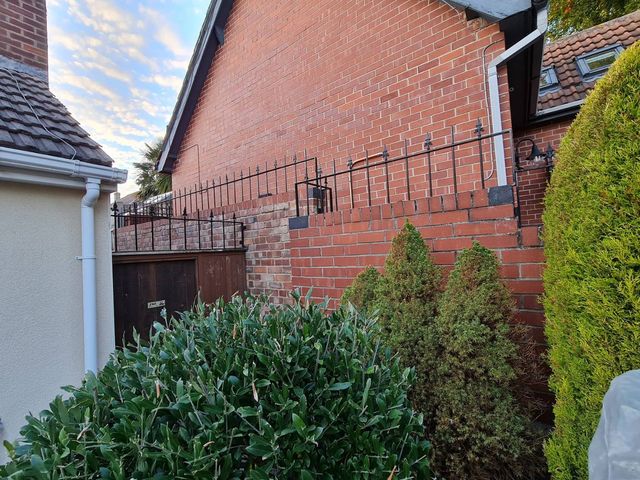
Gate and wall top railings
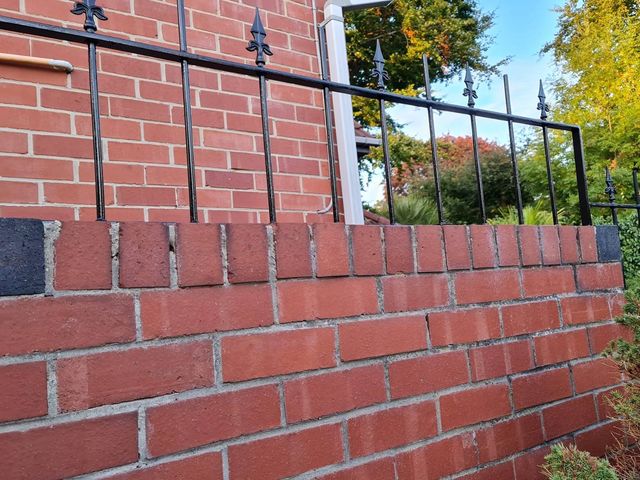
Spear and vertical bar design
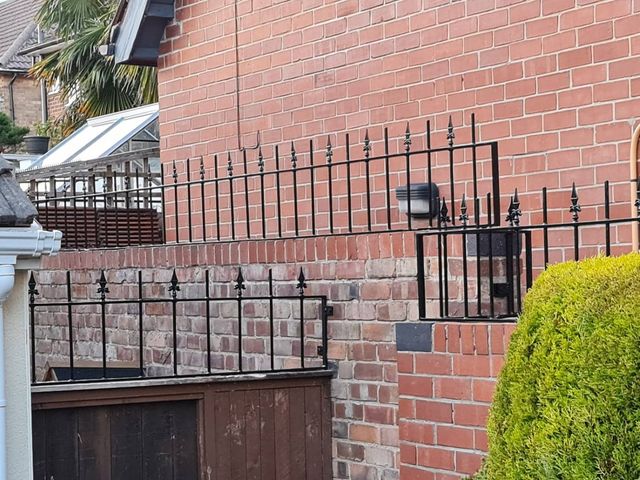
Discreet and decorative wall top railings
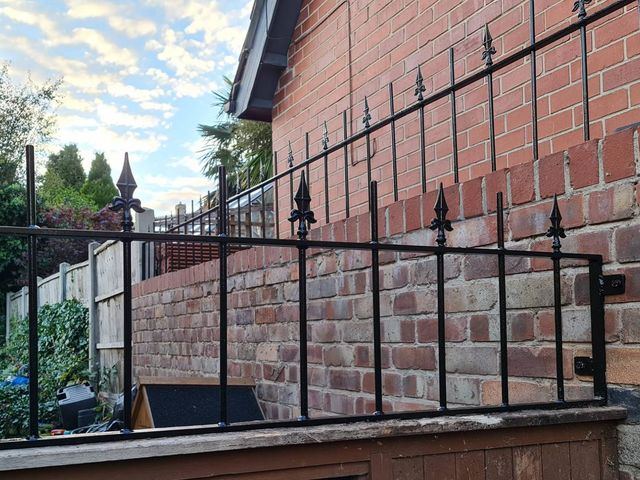
Gate decoration and intruder deterrent
Hand Railings Nottingham
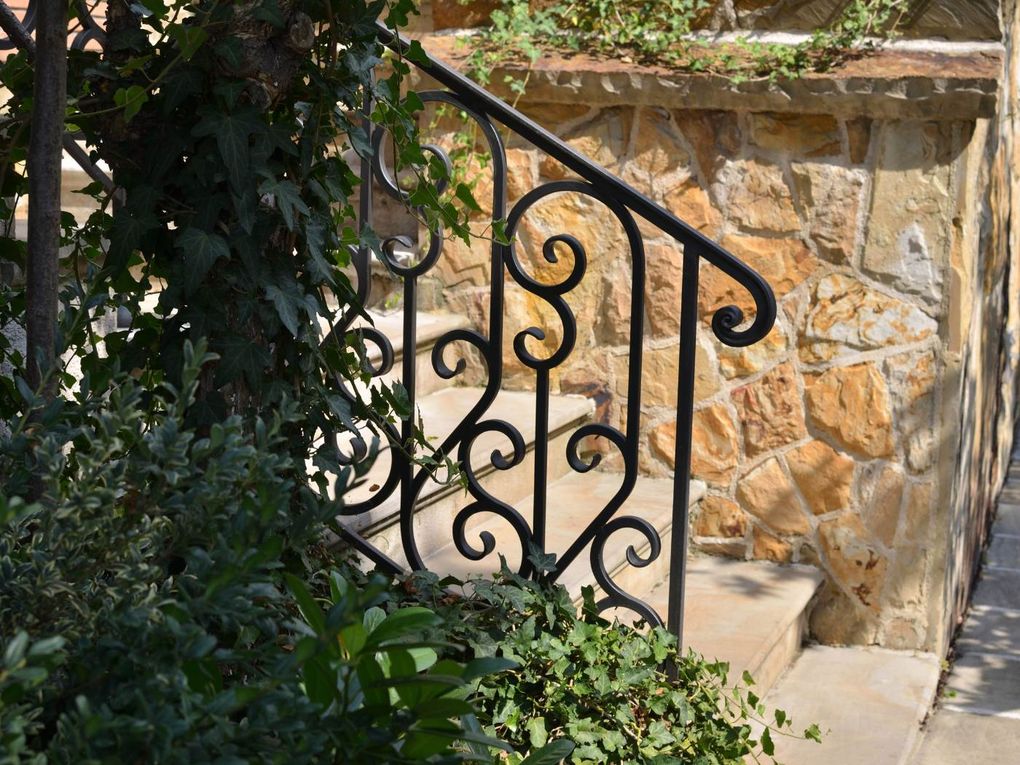
We can manufacture a wide variety of handrails too. As the examples below show, handrails often have to be made to suit the ground layout. They can be simple and discreet or more ornamental, whichever you prefer. Because they are made to order, we can produce handrails suitable for both outdoor and indoor use, and manufacture matching balustrades.
Handrails for Steps: What the Regulations Expect
Handrails are the one railing job where there is a standard to work to rather than just a look to achieve, and it is worth knowing the figures before you order.
Approved Document K of the Building Regulations covers protection from falling. The figures Building Control works to are:
- Guarding is expected wherever there is a drop of more than 600mm. Below that it is a choice; above it, it is a safety requirement.
- 900mm minimum alongside a flight of steps, measured from the pitch line — the line joining the front edges of the treads, not from the tread itself.
- 1100mm minimum on a landing, balcony or raised platform, measured from the finished surface. External and shared guarding takes the higher figure.
- Handrail height between 900mm and 1000mm, on at least one side of a flight, and on both sides where the flight is wider than a metre.
- The 100mm sphere rule. No gap anywhere in the guarding — between balusters, or under the bottom rail — may allow a 100mm sphere to pass. This is the one that catches decorative designs out, and it is why bar spacing is not purely an aesthetic decision.
An important qualification. Approved Document K applies to buildings and to building work. A set of garden steps that is not part of a building, and not part of a wider project needing approval, may fall outside it entirely. Whether your particular job is covered depends on what is being built and where, and that is a question for your local authority Building Control team rather than for us. We are fabricators and fitters, not building control officers.
What we will do is build to those figures as the default, because they exist for good reason and because a handrail that meets them is the one you would want your parents using. If you want something outside them for design reasons, we will fit it and tell you plainly where it departs from the guidance.
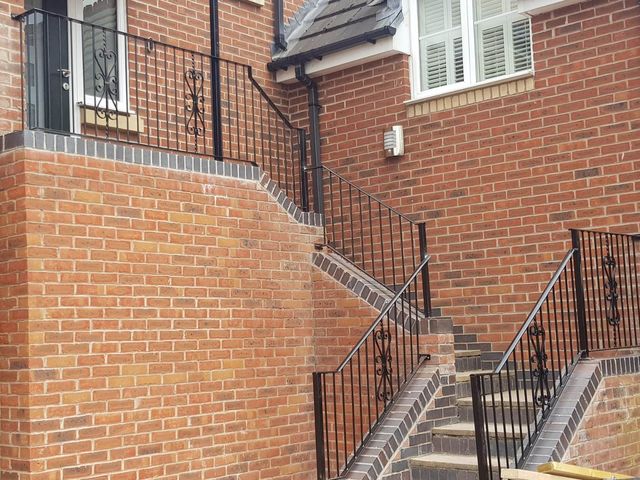
Handrails for outdoor steps
Metal handrails leading to a metal banister.
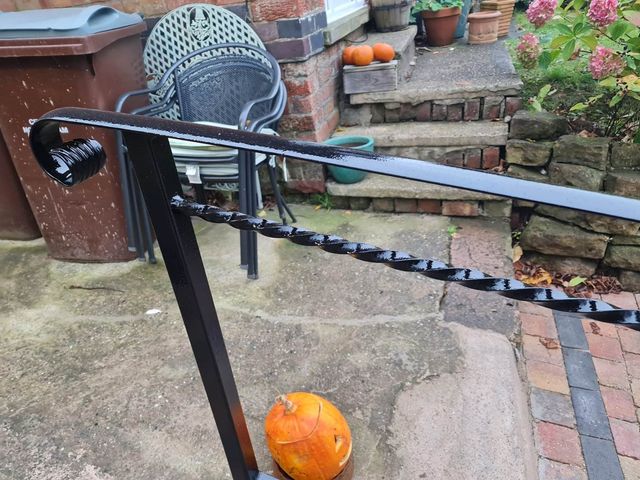
Twisted metal railing as a design feature
Numerous decorative designs are possible.
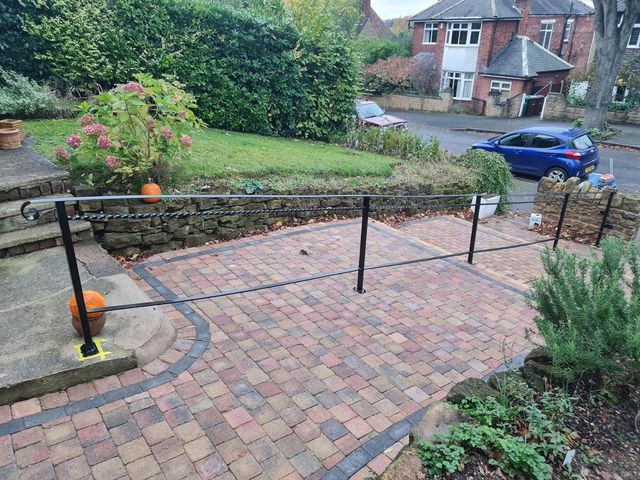
A discreet front garden handrail
A subtle way of providing assistance up a garden slope.
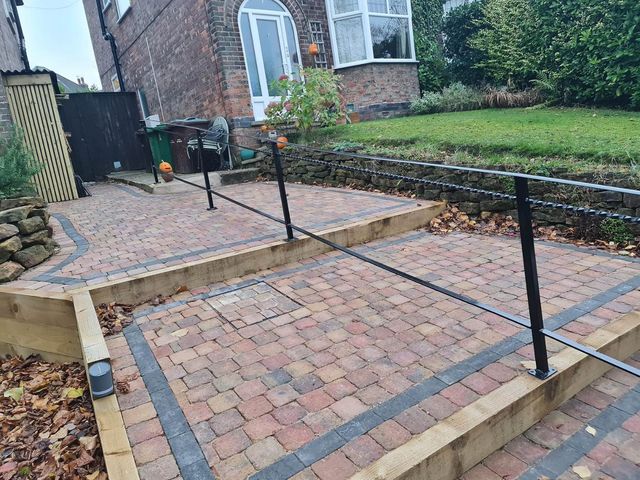
Handrail as a boundary divider
Dual purpose as a neat and discreet divider up a shared access pathway.
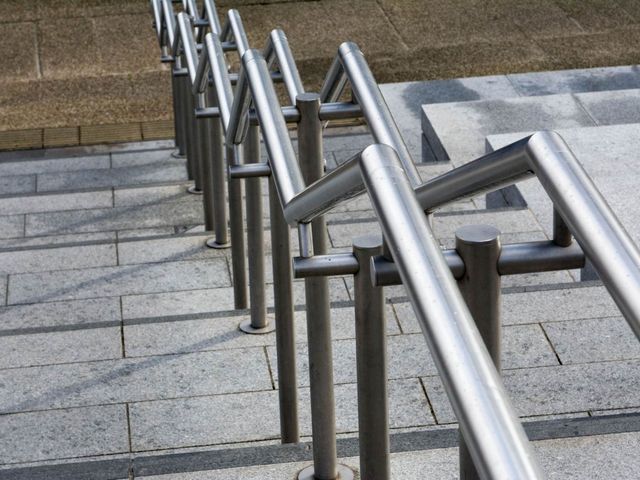
Chrome handrail
We can work with almost any metal — steel, wrought iron, aluminium and chrome.
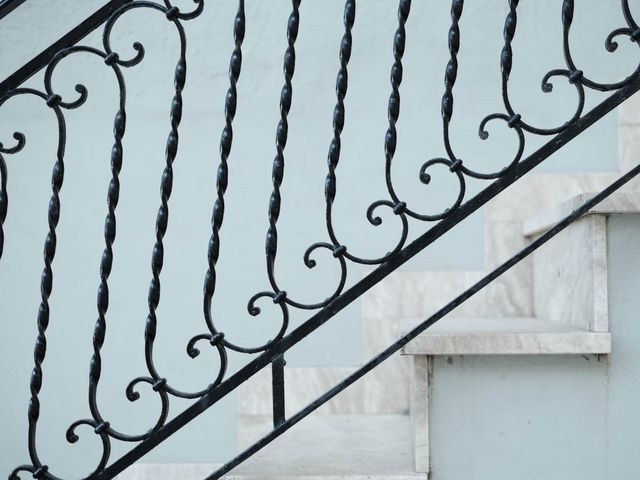
Decorative indoor staircase railings
Our metal railings are suitable for home staircases too.
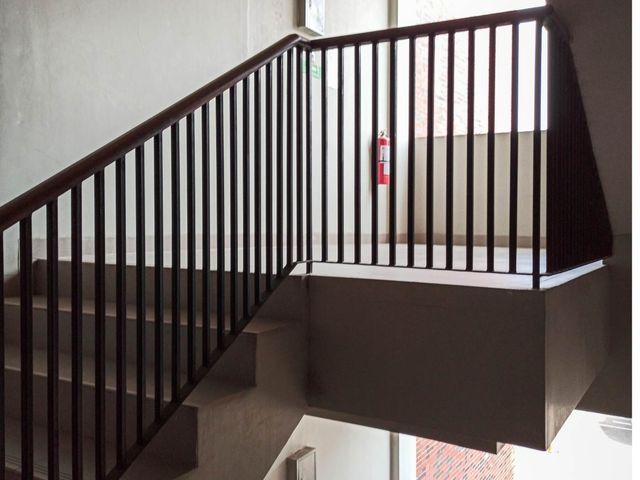
Commercial hand railings
We can supply and fit for commercial premises, both indoor and out.
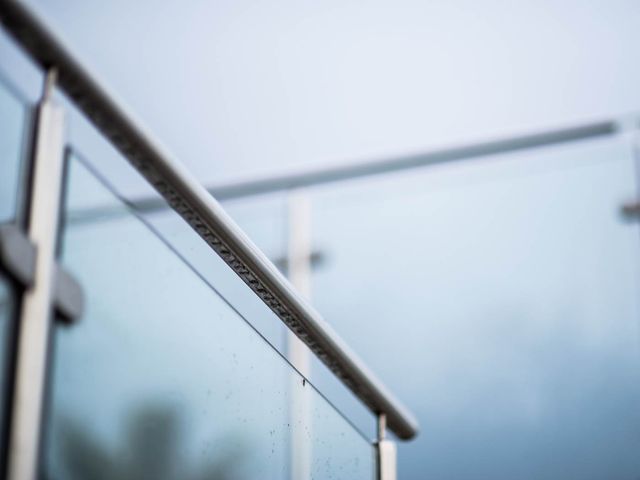
Metal railings and glass
We can combine metal railings with other materials such as glass, composite and wood.
Metal Picket Fencing
For many people the front of their property is an extension of their home, and where first impressions are formed about the property and the people who live in it. Low height metal rail picket fences can be made with numerous decorative finishes. They work well as stand-alone fencing, or as an addition to brickwork, which can give a real feeling of grandeur about a property.
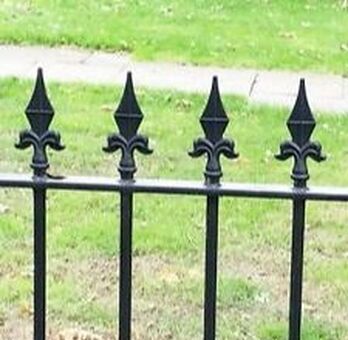
Metal spear top picket fence
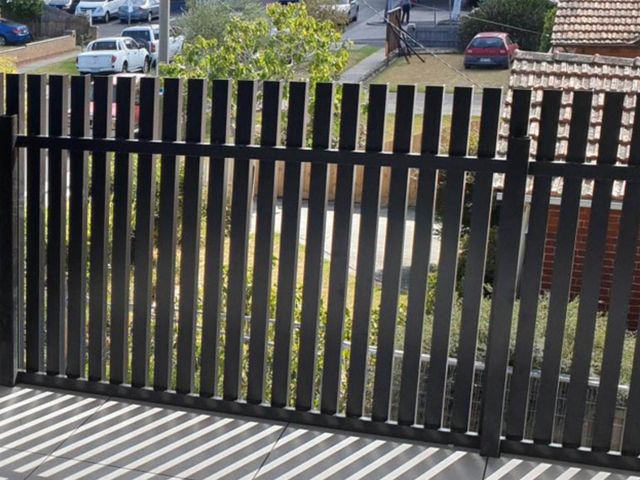
Straight bar metal picket fence
Front Garden Railings and the 1 Metre Limit
Most of the railings we make go on a front boundary, and there is a planning rule that catches people out.
Under permitted development you can generally put up 2 metres at a rear or side boundary, but only 1 metre where the boundary fronts a highway — and a pavement alongside a road counts as a highway. Since a front garden railing almost always fronts the pavement, 1 metre is the normal limit, not the exception.
- The total counts, not the railing alone. Railings set on top of a wall are measured from ground level to the top of the railing, wall included.
- Corner plots have two frontages. The side running down a side road is generally treated the same as the front.
- Gates should not open outward across a public footway.
- Conservation areas and listed buildings can change the position entirely, and can also restrict altering or removing an existing wall or railing.
We are not planning consultants and we will not guess at your property's status. Nottingham City Council's planning team will confirm it, and it costs nothing to ask before we cut steel.
How a Made-to-Measure Railing Job Runs
Because we fabricate in house rather than ordering in stock panels, a railing job runs differently from a fence job. Knowing the sequence helps with timings.
- Survey and measure. Ground rarely runs level or square. We measure the actual line, the falls and the fixing points rather than working from a plan.
- Design and agree. Bar spacing, top detail, post positions, gate openings, and how the run turns a corner or steps down a slope. This is where the 100mm sphere rule and any height limit get settled.
- Fabricate. Cut, welded and finished in our workshop. Decorative tops are attached individually and cleaned back before finishing.
- Finish. Powder coating in the colour agreed. Black is the usual choice, though we can match most colours.
- Install. Posts set into the ground or fixed to a wall depending on the situation, with the run levelled and gates hung and adjusted on site.
What Affects the Price
Railings vary more in price than fencing does, because more of the cost is fabrication rather than materials. The things that move it:
- Length and height — the obvious one, and the least significant of these.
- Design complexity — a straight flat-top run is a fraction of the work of individually attached ball tops, twisted bars or a curved profile.
- Gates — each one is a separate fabrication with its own hardware, hung and adjusted on site.
- Ground and fixings — setting posts into ground is straightforward; core drilling into an existing wall or coping is not.
- Steps and slopes — a run that follows a fall has to be made to that fall, bay by bay.
- Finish — powder coating in a standard colour against a specified or specialist finish.
Send your measurements and a photo and we will give you a provisional figure without a visit. For anything with steps, curves or gates in it, a survey is the only way to price it properly.
Get a price for your railings
Send your measurements and a photo for a quick provisional price, or book a free measured survey and we will come and look at the run properly.
Frequently Asked Metal Railings Questions
Why choose Nottingham Fencing for garden railings?
With our in-house metal fabricators we can provide very competitive rates for all sorts of metal railings. We pride ourselves on offering a very personal and bespoke service. Our fabricators are skilled in working with steel, wrought iron and aluminium, so are much better placed to provide the right solution for your particular needs.
Would you recommend steel or wrought iron railings?
Mild steel is very similar to wrought iron in appearance but is slightly cheaper to produce for the same railings. Once powder coated you would be hard pressed to tell the difference, so you may as well choose the slightly cheaper option, which has the same performance characteristics as wrought iron.
What colour metal garden railings are the most popular?
Black is almost always the main colour, as it gives a tidy and discreet finish. Other colours are mostly used in subtle ways on the top of the rail — the spear or the ball — or on a house number built into the rails, or a decorative detail such as rings, in gold, silver or occasionally red.
How often would metal railings need repainting?
As long as the railings have not been damaged through misuse or a collision, the powder coat finish should last 10 to 15 years before needing any additional painting. If you have existing railings, we also provide a metal railing painting service.
Do my garden steps need a handrail?
Approved Document K expects guarding wherever there is a drop of more than 600mm, at a minimum of 900mm alongside a flight measured from the pitch line, and a handrail between 900mm and 1000mm on at least one side. Whether your specific steps fall under Building Regulations depends on the work being done — that is a question for your local Building Control team. We build to those figures as our default either way.
How far apart can the bars be?
No gap in the guarding may allow a 100mm sphere to pass, including the space between balusters and the gap under the bottom rail. It is the rule that most often constrains a decorative design, and it is why bar spacing is a safety decision rather than only an aesthetic one.
How high can railings be at the front of my house?
Generally 1 metre where the boundary fronts a highway, and a pavement beside a road counts. Most front garden railings fall under that limit rather than the 2 metres allowed at a rear boundary. Where railings sit on a wall, the height is measured from ground level to the top of the railing, wall included.
Are your railings made to measure or standard sizes?
Made to measure. We fabricate in house, so the run is made to your actual measurements, ground levels and fixing points rather than cut down from a stock panel. That is why a bespoke railing is not a next-day job — it is measured, made, finished and then fitted.
Can you fit railings on top of an existing wall?
Yes, provided the wall is sound. We check it for movement, frost damage and loose coping before quoting, because fixing into a failing wall just transfers the problem. Posts can be core drilled into the wall or set behind it, depending on its condition.
Can you repair or match a damaged section of existing railings?
Usually. Because we fabricate ourselves we can make a matching section rather than replacing a whole run. Send a photo of the damage and a close-up of the top detail and bar spacing, and we will tell you whether it can be matched.
How long does a railing job take?
Longer than a fence, because it is made rather than ordered. Survey, design agreement, fabrication, powder coating and then installation. Tell us at the survey if you are working to a deadline and we will say honestly whether it is achievable rather than booking it and hoping.